
The Story of the Map
In 1989, after attending the Renaissance Pleasure Faire for the first time, I became fascinated by the ancient trade routes that connected Europe and the Baltic region with Venice, Arabia, India, China, Africa, and other parts of the known world. As I studied the history of beads and commerce, I learned about the merchants who traveled these routes, exchanging amber, Venetian glass trade beads, incense, precious stones, aromatic resins, coral, ivory, lapis lazuli, carnelian, and countless other treasures. The idea captured my imagination.
Rather than creating a traditional craft booth, I envisioned myself as a merchant traveling the Amber Trade Route and returning with goods and stories from distant lands. To help bring that vision to life, I hired an artist to paint a map on pigskin. It depicted the routes merchants traveled, the regions they visited, and many of the goods they might have encountered along the way. Knowing that Phyllis Patterson, the founder of the Renaissance Pleasure Faire, had been a history teacher, I hoped she would appreciate the historical foundation of the concept. Before presenting it, I carefully documented the faire and studied every booth I could find to ensure that no one else was doing anything similar.
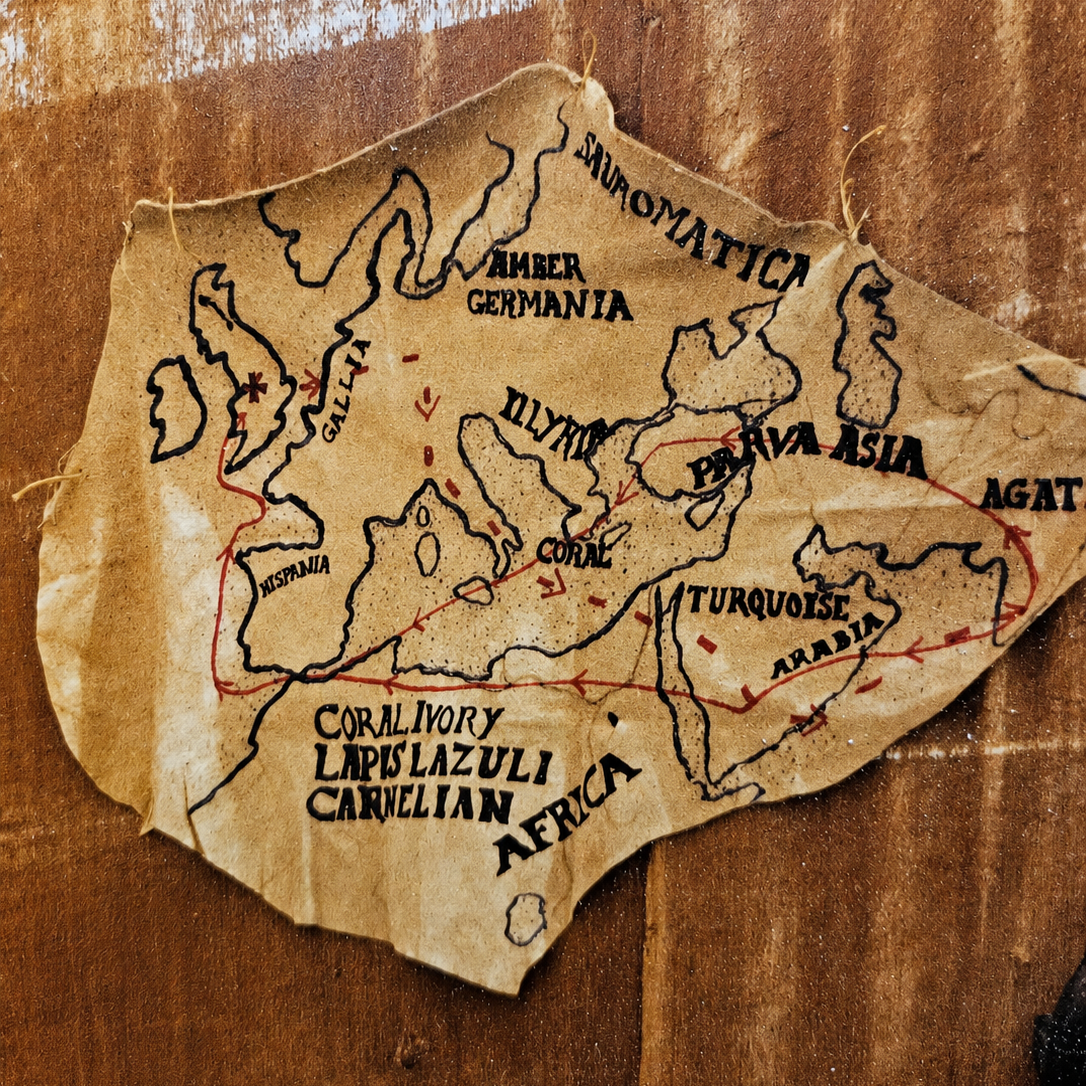
During the jury process, the map became the centerpiece of my display. When Phyllis examined the booth, her attention immediately settled on it. After studying the map, she announced, “I’ve been waiting for this map for twenty-eight years.” That moment opened the door to our acceptance into the faire.
More than thirty-five years later, the map survives as an artifact from the earliest days of the booth. It represents the idea that brought history, geography, trade, culture, crystals, incense, beads, and storytelling together in a single presentation. In many ways, it became the foundation upon which the Renaissance Faire chapter of The Anandaline story was built.